Popular searches
Scouting
Hunting
Gear
Processing
Cooking

Manage
What Whitetails Can Teach You About Hunting Ethics

Long before the first rays from the October sunrise slanted their way through the forest, I knew there were turkeys roosted all around me. That was exciting, because in addition to a couple of deer tags, I had a fall turkey license in my wallet.
It wasn’t too deep into legal shooting light before I...
Tony J. Peterson
May 10, 2024
Read More

Manage
The Largest Typical Whitetail Ever Killed in Ohio was Poached

Christopher “CJ” Alexander, whose name graced headlines in December after photos of him posing with an 18-point buck he harvested drew skepticism, has officially been indicted on 23 total charges, the Ohio Attorney General’s Office, on behalf of the Ohio Department of Natural Resources, announced...
Megan Plete Postol
May 10, 2024
Read More
Manage
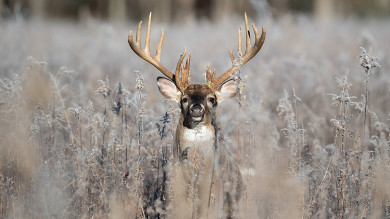
Why the Ghosts of Predators Past Make the Modern Whitetail So Difficult to Hunt
Hunters tend to view deer as we think of them now, which is understandable. It’s also a mostly distilled and distorted look at the most popular game animal. We can’t really help it since we live about 75 years, and have a hard time comprehending time scales much longer than that.
We aren’t...
Tony J. Peterson
May 6, 2024
Read More
Featured Gear
Hunt
Hunt
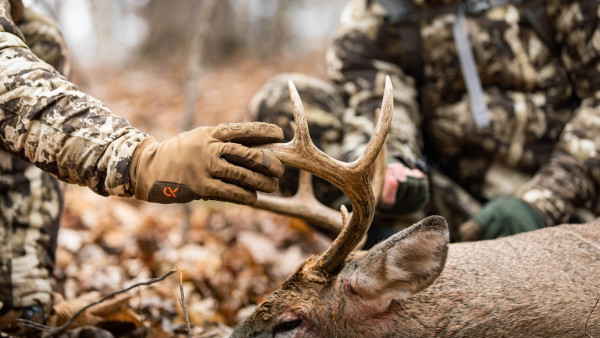
How to Fail Upward as a Hunter

Fail upward? What kind of corporate jargon is that? How could this possibly help me become a better hunter? Hear me out.
Every hunter that I know with at least a dozen seasons under their belt goes through a natural evolution. That evolutionary path is different for everyone because everyone has a...
Dylan Tramp
Apr 11, 2024
Read More
Hunt
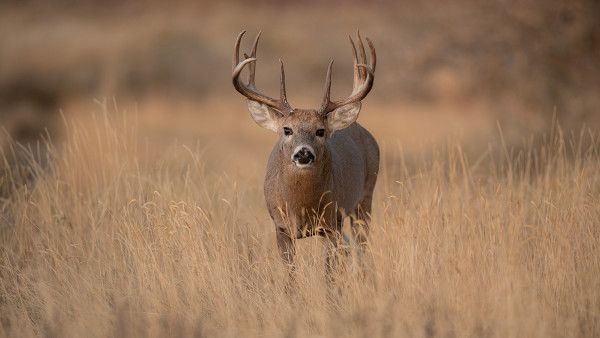
How Our Mature Buck Beliefs Negatively Affect Our Whitetail Success
I grew up thinking that big bucks were almost unkillable. While I was surrounded by people who hunted, almost no one ever killed a deer that was even 3.5 or older. When someone did, it was a big deal.
Our lived reality was in stark contrast to the hunting videos and magazine articles we consumed. It...
Tony J. Peterson
Apr 11, 2024
Read More
Hunt
Who Really Hunts The Hardest-To-Kill Whitetails?
In the whitetail-sphere, it’s common for hunters to proclaim that their deer are harder to kill than the deer found in other places. It’s kind of like bitching about local weather. We all like to present a life of struggle and, of course, perseverance.
With whitetails, no one region or state can...
Tony J. Peterson
Apr 5, 2024
Read More
Hunt
The Whitetail Misses That Sting The Most
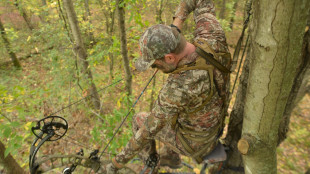
It was early October 1992, and I was sitting in a wooden treestand overlooking an oak-lined ridgetop. I wanted my first deer in the worst way, and she was heading in my direction. The young doe was on the hunt for a few acorns, and when she posed up at 10 yards, I drew and shot. What I didn’t do...
Tony J. Peterson
Mar 29, 2024
Read More
Hunt
Calculate Your Hunting Days Now to Avoid Throwaway Sits

Too much hunting media preaches a conservative approach to whitetail hunting that just doesn’t work for most hunters. This message has largely dominated the conversation around hunting mature whitetails. Minimize pressure, hunt the fringes, wait for the stars to align—the same jargon that’s been...
Adam Moore
Feb 26, 2024
Read More
Hunt
Why Are So Many Deer Hunters So Lazy?
Growing up in southeastern Minnesota, I thought we had the laziest hunters. During gun season, the amount of trucks creeping along gravel roads with the windows down was a sure sign of a road hunt in progress. It never made sense to me to take the hunt out of the hunt and shoot one from the ditch...
Tony J. Peterson
Feb 23, 2024
Read More
Scout
Scout
What Deadheads Teach Whitetail Hunters About Buck Behavior
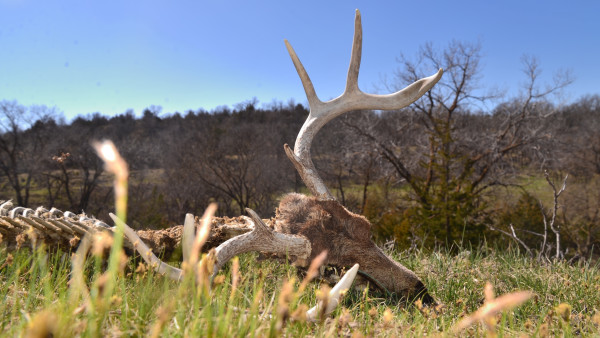
There are two times in my life when I expect to find deadheads. Shed hunting is the first, which should come as no surprise to anyone who has dedicated some time to scooping up antlers in the winter and spring.
The second is while trout fishing. I don’t know how many times I’ve been slipping along...
Tony J. Peterson
May 1, 2024
Read More
Scout
Hunting One Target Buck Can Ruin Your Whole Whitetail Season
Within the next couple months bucks will start growing their new antlers. By mid-summer, social media feeds will fill up with trail camera images of velvet-antlered hitlisters. Quite a few of these deer will be given names if they don’t have one already.
This will happen with hunters ranging from...
Tony J. Peterson
Apr 26, 2024
Read More
Scout
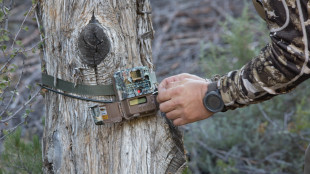
7 Reasons Your Trail Cam Pictures Suck

I’m all too familiar with frustrating trail camera experiences. Ending up with poor-quality images or no pictures at all feels like a waste of time. If you're new to using trail cameras, you can avoid this mistake and learn from my experience.
You could be happy just to know there are deer in the...
Aaron Hepler
Apr 25, 2024
Read More
Scout
The 3 Best Funnels For Quick Shed Hunts
Any time spent in the woods is valuable, but let's talk about the target goal of shed antlers. Days filled with work meetings aren't always a lost cause. A few short minutes could be all you need to grab a few antlers this spring.
Shed hunting doesn't always need to take place where you want to hunt...
Aaron Hepler
Apr 18, 2024
Read More
Scout
Why I Stopped Looking for a Deer Lease

On a brisk weekend in October, I had an epiphany. After three seasons of shivering, sweating, waiting, watching, and throwing the occasional hissyfit—I was standing over a mature, nine-point deer. Was it a record-breaker? No. Did it come at a high price? Yes and no.
This particular instance worked...
Steve Schwartz
Mar 22, 2024
Read More
Manage

Manage
What Whitetails Can Teach You About Hunting Ethics
Long before the first rays from the October sunrise slanted their way through the forest, I knew there were turkeys roosted all around me. That was exciting, because in addition to a couple of deer tags, I had a fall turkey license in my wallet.
It wasn’t too deep into legal shooting light before I...
Tony J. Peterson
May 10, 2024
Read More

Manage
The Largest Typical Whitetail Ever Killed in Ohio was Poached
Christopher “CJ” Alexander, whose name graced headlines in December after photos of him posing with an 18-point buck he harvested drew skepticism, has officially been indicted on 23 total charges, the Ohio Attorney General’s Office, on behalf of the Ohio Department of Natural Resources, announced...
Megan Plete Postol
May 10, 2024
Read More
Manage
Why the Ghosts of Predators Past Make the Modern Whitetail So Difficult to Hunt
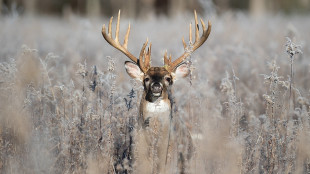
Hunters tend to view deer as we think of them now, which is understandable. It’s also a mostly distilled and distorted look at the most popular game animal. We can’t really help it since we live about 75 years, and have a hard time comprehending time scales much longer than that.
We aren’t...
Tony J. Peterson
May 6, 2024
Read More
Manage
Join Us On the 2024 Working for Wildlife Tour!

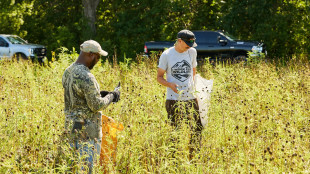
The Working for Wildlife Tour is back for 2024, and we want you to join us!
If you’re not familiar with the Tour, here’s the deal. The Working for Wildlife Tour launched in 2023 as an opportunity to shine a spotlight on the many volunteer events put on across the country by conservation...
Mark Kenyon
Apr 24, 2024
Read More
Manage
Why Some Deer Mean So Much To Us, And Others Just Don’t
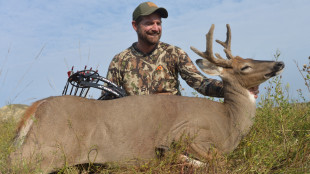
A few years ago, we redid our basement floor. According to my wife, since there were new floors going in, we also needed new furniture and a fresh coat of paint on the walls. While she was right, I mostly felt like my time in the boat throwing topwaters for smallies was disappearing a little more...
Tony J. Peterson
Feb 16, 2024
Read More
Manage
Why You Might Want to Forget About Mature Bucks and Just Hunt
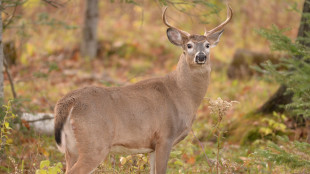
It wasn’t that long ago when you never really heard about mature bucks the way you do now. Sure, maturity made it into the conversation sometimes when people talking about big bucks, but it wasn’t the reason for the season, so to speak.
Today, the whitetail-sphere is dominated by hit-listers with...
Tony J. Peterson
Feb 2, 2024
Read More
Gear
Gear
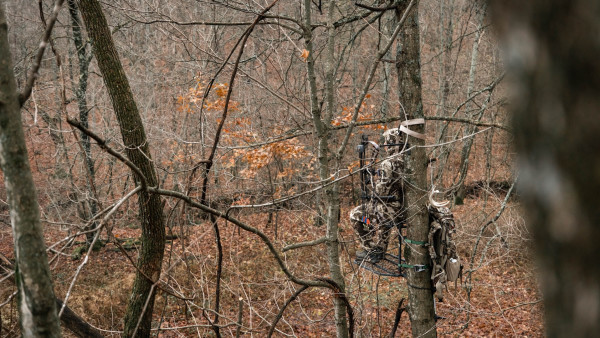
Opinion: Saddles Will Never Replace Tree Stands

I hate talking about the first time I experimented with a tree saddle. It reminds me that I'm not exactly young anymore.
The first time I dove into the world of saddle hunting was when reading John Eberhart's book Bowhunting Pressured Whitetails. The classic was the first mention of a hunting saddle...
Tony Hansen
May 3, 2024
Read More
Gear
5 Archery Tips That Might Just Save Your Next Hunt
Hunting is a sport of continually changing variables, with every decision you make compounding on the next and altering the outcome of the day. The uncertainty is what makes hunting so exciting. The best hunts are usually days when success is completely inconceivable, and when you least expect it...
Dylan Tramp
Feb 15, 2024
Read More
Gear
3 Products That Might Just Make You A Worse Whitetail Hunter
When it comes to buyer’s remorse, we tend to think of junk. Like paying good money for something that just doesn’t deliver on its marketing promise or maybe breaks right out of the box. Cheap hunting gear, and unfortunately some not-so-cheap hunting gear, is not immune to this frustrating issue...
Tony J. Peterson
Feb 9, 2024
Read More
Gear
Should You Be Saddle Hunting?

Saddle Hunting has become all the rage these days. There’s an overabundance of info on the interwebs on how-to, which is better, and why you should. But should you really be saddle hunting?
Saddle hunting is for run-and-gun hunting whitetail deer hunters. Usually, archery equipment is the weaponry...
K.C. Smith
Nov 22, 2023
Read More
Gear
October Madness: Clay’s .300 Winchester Magnum vs. Spencer’s .308 Winchester

UPDATE: We have a winner! Spencer's .308 Win. pulled away from Clay's .300 Win. Mag. by a commanding 179-62 vote. Most voters who supported the .308 mentioned the .308's lesser recoil and more-than-adequate power for deer. Spencer's .308 is slated to go up against Mark's .30-06 in the next round, so...
Jordan Sillars
Oct 2, 2023
Read More
Contributors

Mark Kenyon
Mark Kenyon is the author of That Wild Country, founder of Wired To Hunt, and host of the industry-leading Wired To Hunt Podcast. He is a nationally published writer, a QDMA certified Deer Steward, and MeatEater's resident "whitetail guy."
Check out some of Mark's favorite gear.
Read More

Tony J. Peterson
MeatEater Contributor Tony Peterson has penned hundreds of hunting articles, several books, and developed multiple podcasts. Peterson’s whitetail-related contributions stem from real-world experience and a passion for hunting new ground each season. He's considered one of the top whitetail hunters...
Read More

Spencer Neuharth
Spencer Neuharth is the director of web content at MeatEater, producer of Wired to Hunt, and founder of Rut Fresh. His writing has been featured in over a dozen magazines, including Field & Stream, Petersen's Hunting, and Men's Journal. His work is a reflection of his roots as a whitetail hunter and...
Read More

Clay Newcomb
Clay Newcomb is a 7th-generation Arkansan that grew up in the Ouachita Mountains. He's a hunter, mule skinner, curious naturalist, and observer of rural culture. He's also a writer, filmmaker, podcaster, and owner/publisher of Bear Hunting Magazine.
Check out some of Clay's favorite gear.
Read More

Tyler Jones
Tyler is known for being the frontman of Tyler and the Tribe, co-host of The Element Podcast, The Buck Truck Video Series, still using mechanical broadheads, and co-host of Rut Fresh Radio.
He is a believer, husband, father of two, songwriter and guitar player, small stream aficionado, wannabe...
Read More

K.C. Smith
K.C. is known for taste testing everything and being impulsive. He is the co-founder of The Element, co-host The Element Podcast, co-host of Buck Truck, and co-host of Rut Fresh Radio
K.C. is an East Texas family man, gardener, adventure seeker, fig enthusiast, Christian Youth Leader, and a half...
Read More
Mark Kenyon
Mark Kenyon is the author of That Wild Country, founder of Wired To Hunt, and host of the industry-leading Wired To Hunt Podcast. He is a nationally published writer, a QDMA certified Deer Steward, and MeatEater's resident "whitetail guy."
Check out some of Mark's favorite gear.
Read More
Tony J. Peterson
MeatEater Contributor Tony Peterson has penned hundreds of hunting articles, several books, and developed multiple podcasts. Peterson’s whitetail-related contributions stem from real-world experience and a passion for hunting new ground each season. He's considered one of the top whitetail hunters...
Read More
Spencer Neuharth
Spencer Neuharth is the director of web content at MeatEater, producer of Wired to Hunt, and founder of Rut Fresh. His writing has been featured in over a dozen magazines, including Field & Stream, Petersen's Hunting, and Men's Journal. His work is a reflection of his roots as a whitetail hunter and...
Read More
Clay Newcomb
Clay Newcomb is a 7th-generation Arkansan that grew up in the Ouachita Mountains. He's a hunter, mule skinner, curious naturalist, and observer of rural culture. He's also a writer, filmmaker, podcaster, and owner/publisher of Bear Hunting Magazine.
Check out some of Clay's favorite gear.
Read More
Tyler Jones
Tyler is known for being the frontman of Tyler and the Tribe, co-host of The Element Podcast, The Buck Truck Video Series, still using mechanical broadheads, and co-host of Rut Fresh Radio.
He is a believer, husband, father of two, songwriter and guitar player, small stream aficionado, wannabe...
Read More
K.C. Smith
K.C. is known for taste testing everything and being impulsive. He is the co-founder of The Element, co-host The Element Podcast, co-host of Buck Truck, and co-host of Rut Fresh Radio
K.C. is an East Texas family man, gardener, adventure seeker, fig enthusiast, Christian Youth Leader, and a half...
Read More
More Whitetail Content
Whitetail
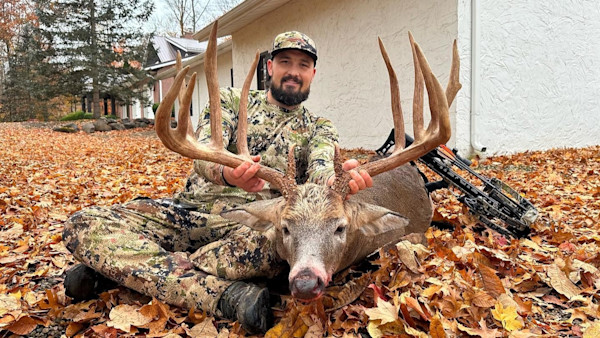
Ohio Hunter Kills One of World's Biggest Whitetails
A hunter in Ohio took down a massive 12-point whitetail in October of this year, and recently released scoring indicates it’s one for the record books.
Scorers with Buckmasters Whitetail Trophy Records (BTR) measured Jason Thomas’s enormous typical buck at 208 ⅝”, which makes it the new Buckmasters...
Jordan Sillars
Dec 8, 2023
Read More
Whitetail
America’s Rarest Huntable Deer

White-tailed deer are ubiquitous in North America. It seems like half of the country heads out into the woods to pursue the enigmatic species every fall and winter, to experience the great outdoors and fill their freezers. But there’s one subspecies of whitetail very few hunters know about, in a...
Lakhan Clark
Sep 15, 2023
Read More
Whitetail
Why Opening Week Is Better Than The Rut For Mature Whitetails
In my home state of Minnesota, the firearm season opens the first weekend of November. This means that for many years, bowhunters relinquished the woods to the orange army within the first few days of the month. When I was younger, that bothered me a lot. I wanted to hunt the rut, but it just wasn’t...
Tony J. Peterson
Sep 12, 2023
Read More
Whitetail
Do Deer Inbreed?

Spend much time at deer camp, and you’ll probably hear a hunter blame wonky antlers, piebald coloration, and other genetic abnormalities on inbreeding. But the science says incestuous mating usually isn’t to blame, and inbreeding is a nearly insignificant concern for whitetail hunters.
Astronomical...
Emily Kantner
Apr 10, 2023
Read More
Whitetail
When To Abandon Your Rut Hunting Plan
The danger with rut hunting advice is that it’s often diluted, over-simplified garbage. Well, maybe not garbage, but much of the how-to content built around killing a buck during the rut assumes an awful lot about the audience and the conditions that aren’t always true.
For example, the weather...
Tony J. Peterson
Nov 2, 2022
Read More
Whitetail
Welcome to Whitetail Week: Sales, Tactics, and More

It’s the most wonderful time of the year for whitetailers everywhere. We want to celebrate the season by offering advice from seasoned pros along with some great deals on whitetail-specific products to set you up for success in hunting North America’s most sought-after big game animal. As a bonus...
MeatEater Staff
Oct 10, 2022
Read More